
Are We the First?
The Pre-Adamic History of Our Enchanted Cosmos


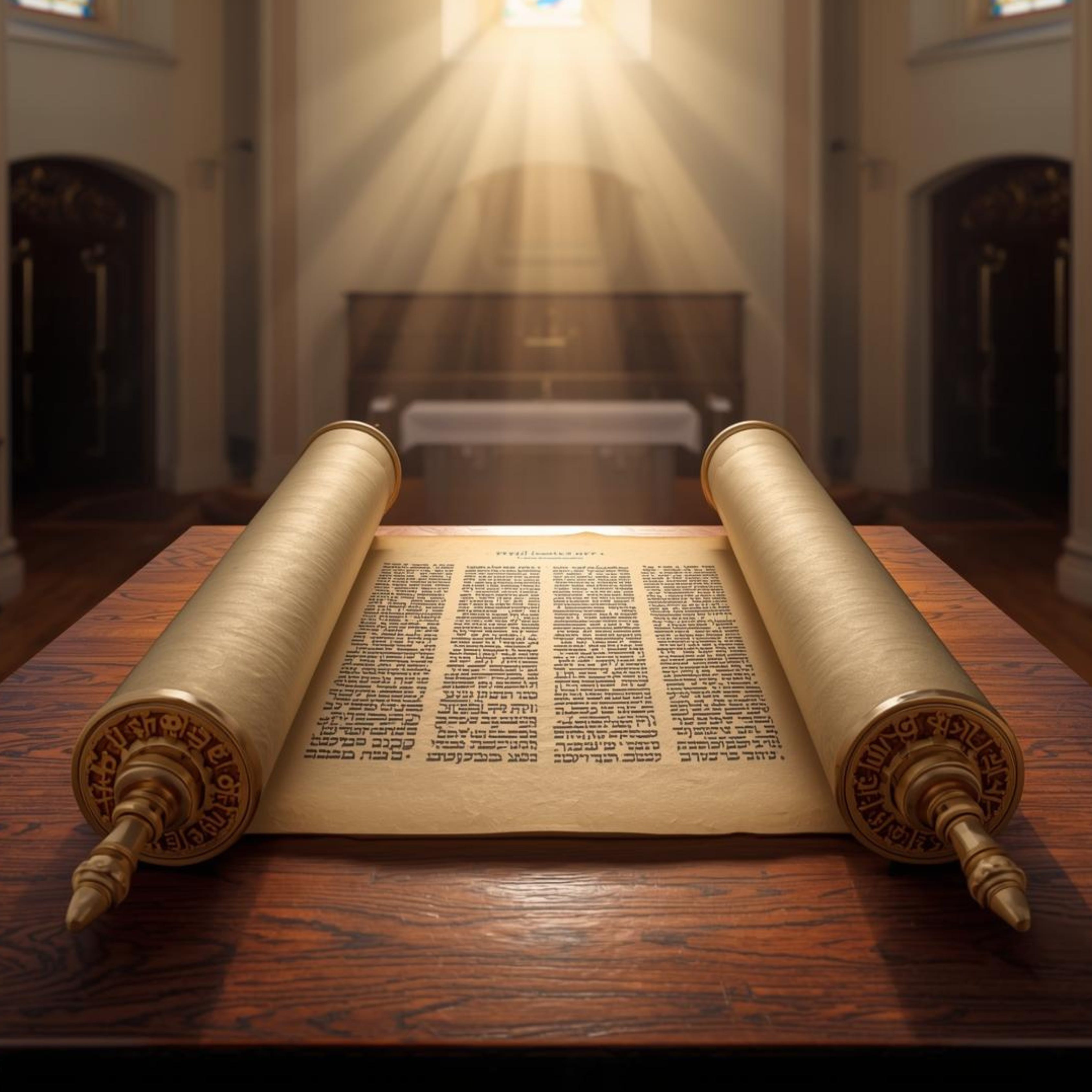
Towards the beginning of the Genesis Rabbah, a classic medieval Jewish midrash on the Book of Genesis, there is a very mysterious line:
“Other worlds were created and destroyed ere this present one was decided on as a permanent one.”1
This is not an isolated statement in Jewish tradition, but one corroborated from a variety of Talmudic and rabbinical sources, many of which speak of “974 generations before Adam”:
“The Holy One, Blessed be He, said to them: He came to receive the Torah. The angels said before Him: The Torah is a hidden treasure that was concealed by You 974 generations before the creation of the world, and You seek to give it to flesh and blood? As it is stated: “The word which He commanded to a thousand generations” (Psalms 105:8). Since the Torah, the word of God, was given to the twenty-sixth generation after Adam, the first man, the remaining 974 generations must have preceded the creation of the world.” (Shabbat 88b)
Many Jewish commentators, past and present, have interpreted this concept in a variety of ways. Some have favored a mystical concept of “spiritual worlds” or “spiritual generations” while others (particularly in recent times) have applied the concept quite literally. James Ballard at the Hidden Orchard Project writes:
“The short version of the story is that these earlier generations, for the most part, came and went. These generations are often referred to as civilizations or worlds.
“In general, the idea of earlier civilizations is something many cultures have shared throughout time, such as the lost city of Atlantis.
“It is difficult to comprehend the timeframe we’re looking at, but it’s plausible that it spans billions of years. It seems some of them may have run their course, while others became corrupt in one way or another and underwent a mass extinction event, much like the flood in the Torah.”2
Naturally enough, many modern Jewish rabbis (and Christian theologians) see this idea as a means of reconciling Darwinian evolution with the biblical account of Creation. But I’ll put my own cards on the table at this point: I am an unapologetic Six-Day Creationist who takes a straightforward reading Genesis 1. So what significance could an idea like this possibly have for someone of my persuasion? Isn’t this precisely the kind of “Jewish fable” Paul warns about in his epistles (Titus 1:14)? Isn’t it clearly being used to accommodate Scripture to Darwinism in precisely the way generations of Creationist scholars have fought against?
Well, not so fast.
In 1994, physicist Dr. Russell Humphreys published a fascinating book called Starlight and Time, which marked the first serious entry of Creationist scholarship into the field of cosmology. Many Creationist scholars up to that point, lacking Dr. Humphrey’s rigorous physics background and seeing the field as inherently dominated by an evolutionary perspective, had avoided it altogether. Building on the mathematics of Einstein’s General Relativity, the book constructs an original model that reconciles the Six Days of Creation with the vast timespan required for light to reach Earth from distant parts of the universe. As Dr. Humphreys explains:
“…when the expanding universe was at a critical size (about fifty times smaller than it is now), gravitational time dilation would have been very important. My theory proposes that the cosmos was at that critical size during the fourth day of Creation Week. While one ordinary day was elapsing on earth, billions of years worth of physical processes were taking place in distant parts of the universe. This allows starlight from even the most distant star to arrive during or soon after the fourth day, the same day God created all the stars. During that day, most of the expansion of the cosmos would have taken place.”3
In Aliens are Elves, we covered how intelligent life could exist elsewhere in the universe without compromising man’s unique status as the living image of God. But this facet of Jewish tradition—filtered through Dr. Humphrey’s model—could show why it could exist. Recall the strong hints that the angelic hierarchy contains more (perhaps far more) varieties of creatures than the “bodiless intelligences” that are the subject of most historical Christian theology. What if God allowed these creatures eons of time in which to live, reproduce, and grow ancient within their very own cultures and civilizations as He created our Earth—which was the very pinnacle and paradise of all Creation, incorporating the very best of what came before? Once the Six Days were complete, these pre-Adamic beings could have descended to Earth from across the universe to become the stoichea we mentioned in Legends Are True. To quote James Ballard again on the 974 generations:
“It is believed that some of these beings were made into angels, some into demons, and still others may have retreated to a subterranean existence.”4
For the benefit of my fellow Creationists, let’s run through some objections.
The main objection from which most others follow is the presence of sin and death before the Fall. The idea of multiple civilizations and worlds rising, falling, and suffering destruction (especially over “billions of years”) raises the same theological challenges as “theistic evolution.” But I will point out that historical Christian theology already assumes an implicit “Fall before the Fall” in the form of Lucifer’s rebellion and a “War in Heaven” taking place either just before or during the Creation Week. Some conservative Protestant theologians such as Thomas Chalmers, G.H. Pember and C.I. Scofield even believed that Lucifer reigned over a prior earth that suffered destruction from this conflict and was left “without form and void” as we see in the Genesis account. So the Jewish concept introduces no new difficulties about reconciling the presence of primordial sin with a “very good” creation. As we see in older paradigms, it remains sequestered in the “outer cosmos” without breaking into Earth and Eden until Adam and Eve’s transgression.
Further, present-day Creation Scientists already accept the reality of cell death and plant death as part of the original order of Creation. And least one early Christian theologian, Basil of Caesarea, allowed for the possibility of animal death before the Fall.5 And there are also Second Temple Jewish texts (some of which have made their way into the Deuterocanon) which describe Adam and Eve as having been created mortal.6 Immortality, from this standpoint, was a gift they would have received from partaking of the Tree of Life. They could perhaps have shared this gift as part of their command to fill the earth and subdue it. In its newly-created state, all life on Earth could have been sufficiently long-lived that no deaths took place in the interval, and it would have remained peaceful, herbivorous, and harmonious throughout. The death Adam and Eve ultimately received from their disobedience would thereby be the spiritual death of severed communion with God, rendering all subsequent physical death uniquely terrible and robbing the wider Creation of the incorruption it was meant to receive through the Tree of Life.
Also, the “billions of years” this model assumes are not a fudge to rescue Darwinian evolution by relocating it from our Earth to elsewhere in the universe. While some might seize on it for that purpose, that says more about their own particular predilections than what the model actually implies. As someone who has always found Darwinism both ugly and distasteful, I’m inclined to think that pre-Adamic civilizations in the wider cosmos would have experienced growth and development of a sort more resembling the stories of Tolkien and Lewis than the deadening naturalism of secular biology textbooks.

Finally, I’ll address a wider audience with the following: as far as I can discern, there is nothing in this model which would contradict either the Scriptures or the Tradition of the Church. It need not imply an “Origenist” metaphysics of the sort that multiple councils have condemned (nothing about it demands, for example, that the souls of any such pre-Adamic beings be reborn in human bodies). Nor do I intend to assign Jewish Tradition a magisterial authority over the Church’s interpretation of Scripture or adopt fables that turn from the truth (Titus 1:14). Rather, I offer it the same fair hearing which the Fathers of the Church offered to the works of the Greek philosophers. As the great ecclesiastical historian Socrates Scholasticus once stated:
“…both Christ and his Apostle enjoin us ‘to become discriminating money-changers,’ so that we might ‘prove all things, and hold fast that which is good‘: 1 Thessalonians 5:21 directing us also to ‘beware lest any one should spoil us through philosophy and vain deceit.’ Colossians 2:8 But this we cannot do, unless we possess ourselves of the weapons of our adversaries: taking care that in making this acquisition we do not adopt their sentiments, but testing them, reject the evil, but retain all that is good and true: for good wherever it is found, is a property of truth.”7
I present this not a dogma but a theologoumenon (“pious opinion”) humbly contributed to the Great Conversation of the Church. Our Earth was indeed created in Six Days. And yet the history we see written in the stars is no mere fiction, but the record of something real. The Holy Scriptures are an inexhaustible treasury of precious jewels and hidden mysteries. If nothing else, I hope this reflection can help inspire others to search them out.
“It is the glory of God to conceal a thing: but the honour of kings is to search out a matter.” (Proverbs 25:2)
You know, I've thought this for a long time, but I was afraid to speak on it, for fear of sounding insane or impious. This is quite possibly the most fascinating article I've ever read on this app.
While I have never been much curious about the idea of pre-Adamic peoples, I have been for a while curious about the possibility of co-Adamic peoples, because of Cain's wife, and I'm curious if you have any thoughts on that. I'm also a creationist, and the usual answer offered is that Cain's wife was one of his sisters or nieces, which, I can't prove that wasn't the case, but I really struggle to accept that answer. The problem is repeated after the Flood with Noah and his family. I take the global Flood literally, meaning only those 8 were left. The problem resurfaces, just one generation removed by Noah's sons and their wives, but everyone in the subsequent generation would have married a first cousin. And Paul does say in Acts 18 that from one blood God made all nations, so it's uphill to even postulate the idea of co-Adamic peoples.